
Showing posts with label psychology. Show all posts

Thursday, July 30, 2015

we are all confident idiots by David Dunning

The American author and aphorist William Feather once wrote that being educated means “being able to differentiate between what you know and what you don’t.” As it turns out, this simple ideal is extremely hard to achieve. Although what we know is often perceptible to us, even the broad outlines of what we don’t know are all too often completely invisible. To a great degree, we fail to recognize the frequency and scope of our ignorance.

In many cases, incompetence does not leave people disoriented, perplexed, or cautious. Instead, the incompetent are often blessed with an inappropriate confidence, buoyed by something that feels to them like knowledge.

An ignorant mind is precisely not a spotless, empty vessel, but one that’s filled with the clutter of irrelevant or misleading life experiences, theories, facts, intuitions, strategies, algorithms, heuristics, metaphors, and hunches that regrettably have the look and feel of useful and accurate knowledge. This clutter is an unfortunate by-product of one of our greatest strengths as a species. We are unbridled pattern recognizers and profligate theorizers. Often, our theories are good enough to get us through the day, or at least to an age when we can procreate. But our genius for creative storytelling, combined with our inability to detect our own ignorance, can sometimes lead to situations that are embarrassing, unfortunate, or downright dangerous—especially in a technologically advanced, complex democratic society that occasionally invests mistaken popular beliefs with immense destructive power (See: crisis, financial; war, Iraq). As the humorist Josh Billings once put it, “It ain’t what you don’t know that gets you into trouble. It’s what you know for sure that just ain’t so.” (Ironically, one thing many people “know” about this quote is that it was first uttered by Mark Twain or Will Rogers—which just ain’t so.)


Saturday, April 5, 2014

What Should We be Worried about? By John Brockman

Sooner or later bye intent or by accident we will face a catastrophic breakdown of the Internet. Yet we have no plan B in place to reboot a rudimentary, low bandwidth  emergency communication network if the high-bandwidth system we've come to depend on fails.
George Dyson

I know that my own perception of time has been changed by technology. If I go from using a fast computer or web connection to using even a slightly slower one, processes that just take a second or two longer seem almost intolerably slow.... Because our experience of time is so important to our experience of life, it strikes me that these kinds of technology induced changes in our perceptions can have broad consequences
Nicholas G. Carr

If we have 1 million photos, we tend to value each one less then if we only had 10. The Internet forces a general devaluation of the written word, a global deflation  in the average words values on many axes. As each word tends to get less reading time and attention to be worth less money at the consumer end, it naturally tends to absorb less writing time and editorial attention on the production side.... But it any rate, the Internet drivel factor can't be good and is almost certain to grow in importance as the world fills gradually with people who have spent their whole lives glued to their iToys.
David Gelernter

We should worry about losing lust as the guiding principle for the reproduction of our species. Attempts to manage reproduction through biotechnologies and screenings of eggs, sperm, partners and embryos will interfere with the lust dominated process.
Tor Norretranders

We have nothing to worry about but worry itself.
Virginia Heffernan

Don't worry about the end of the universe or the earth falling into a galactic black hole. But if banks leverage to the hilt again, then you should worry about hearing another big sucking sound.
Seth Lloyd

I've given up worrying. I merely float on a tsunami of acceptance of anything life throws at me and marvel stupidly.

Terry Gilliam

If the population of less educated, religiously conservative individuals increases and continues to vote as they have been voting, funding for education and scientific research is also likely to decrease. A less educated population could contribute not only to an upward shift in population size but also to a downward economic spiral... A higher performing intellectual class is also associated with better developed and freer economic and political institutions... According to my colleagues from other countries, the American educational system has an unimpressive reputation through the university level but is regarded as the top of the heap when it comes to training at the highest level...
Douglas Kenrick

Saturday, May 5, 2012

How Creativity Works and Groucho: Two Books on Two Favorite Subjects


I read two books on some of my favorite subjects: creativity and Groucho Marx. I guess there is a connection there as Groucho was one of the most spontaneous and creative funny men in comedy. Even as I get older, I still look for ways to become more creative.

Imagine: How Creativity Works by Jonah Lehrer offers science, stories and practical tips on the creativity process. I've listed some take-aways below:


  • Creativity doesn't increase with experience. It tends to peak after a few years of work and then go into a long slow decline.
  • One needs to think like a young person, willing to embrace radical new ideas and new challenges.
  • To be creative, one needs to be willing to risk embarrassment, ask silly questions and leave behind the safety of one's expertise. One must escape the shackles of familiar thought.
  • Brainstorming groups think of far fewer ideas than the same number of people who work alone and later pool their ideas.
I also read Raised Eyebrows: My Years Inside Groucho's House by Steven Stoliar that essentially covers the last years of Groucho Marx. In many ways this is a very sad book as Groucho battled old age, poor health and family squabbles around control of his wealth and affairs. Stoliar was a Groucho fan who as a young college student worked for Marx as a secretary and archivist. 

Even while battling strokes and poor health, Groucho still evidenced his quick wit and humor that Stoliar was able to capture. Stoliar also shared stories about various celebrities that he came in contact while working with Marx including Mae West, Steve Allen, Bob Hope (who did not come off well in this book at all), Jack Lemmon, George Jessel, Marvin Hamlisch and many others.

Saturday, March 31, 2012

A Book I Wish People Who Were My Managers and Friends Read So They Would Understand Me Better

As a self described introvert, I found Quiet: The Power of Introverts in a World That Can't Stop Talking by Susan Cain comforting and supportive. So it's OK to be quiet, reflective and avoid back slapping and meaningless chatter with strangers. Good book, good insights and very good stories.

Listed below are some notes I took from the book that struck me as insightful..


Introverts are drawn to the inner world of thought and feeling, said Jung, extroverts to the external life of people and activities. Introverts focus on the meaning they make of the events swirling around them; extroverts plunge into the events themselves.
==========
Introverts often work more slowly and deliberately. They like to focus on one task at a time and can have mighty powers of concentration. They’re relatively immune to the lures of wealth and fame.
==========
Introverts prefer to devote their social energies to close friends, colleagues, and family. They listen more than they talk, think before they speak, and often feel as if they express themselves better in writing than in conversation. They tend to dislike conflict. Many have a horror of small talk, but enjoy deep discussions.
==========
Extroverted leaders enhance group performance when employees are passive, but that introverted leaders are more effective with proactive employees.
==========
Extroverts, on the other hand, can be so intent on putting their own stamp on events that they risk losing others’ good ideas along the way and allowing workers to lapse into passivity.
==========
The simple act of being interrupted is one of the biggest barriers to productivity. Even multitasking, that prized feat of modern-day office warriors, turns out to be a myth. Scientists now know that the brain is incapable of paying attention to two things at the same time. What looks like multitasking is really switching back and forth between multiple tasks, which reduces productivity and increases mistakes by up to 50 percent.
==========
Introverts enjoy shutting the doors to their offices and plunging into their work, because for them this sort of quiet intellectual activity is optimally stimulating,
==========
Another study, of sixty-four traders at an investment bank, found that the highest-performing traders tended to be emotionally stable introverts.
==========
Introverts also seem to be better than extroverts at delaying gratification, a crucial life skill associated with everything from higher SAT scores and income to lower body mass index.
==========
Extroverts get better grades than introverts during elementary school, but introverts outperform extroverts in high school and college. At the university level, introversion predicts academic performance better than cognitive ability.
==========
Introverts outperform extroverts on the Watson-Glaser Critical Thinking Appraisal test, an assessment of critical thinking widely used by businesses for hiring and promotion. They’ve been shown to excel at something psychologists call “insightful problem solving.
==========

Friday, December 30, 2011

Ten Most Inspirational Books I've Read in My Life


While most books one reads generally fall away from memory after you are done with them, I have listed 10 books that I found particularly inspiring, transformative or thought provoking. For my religious friends, this is exclusively a secular list though several of these books speak about faith.

10. Hardy Boys by Franklin W. Dixon, Chip Hilton by Claire Bee, Rick Brant by John Blaine, Tom Swift by Victor Appleton.
My # 10 is a series of books that helped a shy, skinny kid who had lost his father to a heart attack and needed some direction. Plus these books started me on my passion for reading. I got my homework done early so I could read these books.

A few decades ago and about 50 lbs. lighter, I used to jog and occasionally raced 5 and 10K races. Fixx was the running guru in the 70s. Geez, I remember a day where I jogged about 10 miles and was not tired.

8. Flow: The Psychology of Optimal Experience by Mihaly Csikszentmshayli
I remember this wasn't an easy book to read. However flow became a mantra. Flow was described as a state where people experienced deep enjoyment, creativity and clarity. Within this state of flow, you lose all track of time. I experienced flow playing basketball or working on a project that interested me. Not enough activities generating flow now.

7. The Wisdom of Insecurity by Alan Watts
Watts provides insights on “finding security and peace of mind in a world whose very nature is insecurity, impermanence and unceasing change.” This book was written in the 1950s but it’s wiser that any self-help book you can read today. I've underlined quite a bit of this book.

I admire people who are accomplished with many talents and various types of achievements. Those types of people are usually called Renaissance Men or Women. Gelb offers a guide to Renaissance living and pursuits.

Old men start wars and young men fight them. I found it very inspiring and gratifying to read about the education of a man who was a West Point graduate, Rhodes Scholar, a Ranger and an Officer who led men into battle in Afghanistan. I felt better about the prospects for America in the future. Hopefully future generations will do better than what the leaders of the Baby Boomer generation have accomplished.

4. The Way of the Ronin by Beverly Potter
A Ronin was a masterless samurai and warrior who depended entirely upon themselves and their own skills to survive in Japan’s feudal society. In most circles, they were considered outlaws. As anyone who has had the fortune (or misfortune) to “manage me” has learned I’m not the conventional employee type. I read this book in the early 1990’s and it changed my thinking about work, career and life balance.

This book is on my list not necessarily for any information or advice it offers. I found the questions very compelling, particularly those related as to what is living a good life. We have to decide what's best for ourselves. A great book for baby boomers reevaluating their lives and what to do next.

Diagnosed with ALS and given less than five years to live, Simmons accurately describes life as a “terminal condition.” His book opened me to new meanings of life. This book and the Barton book described below offer the insights of brave men facing death and how they have accepted their fates.

1. Not Fade Away: A Short Life Well Lived by Lawrence Shames and Peter Barton
Peter Barton, while facing a cancer that would end his life, wrote a book on how to die but more importantly how to live. Barton offered a piece of advice that I wish I could accomplish in my life… “I promised myself that I would not have a bad day for the rest of my life. I f someone was wasting my time, I’d excuse myself and walk away. If a situation bothered me or refused to get resolved, I’d shrug and move on. I’d squander no energy on petty annoyances, poison no minutes with useless regret.”


Wednesday, September 21, 2011

I Can Resist Everything Except Temptation-- Oscar Wilde

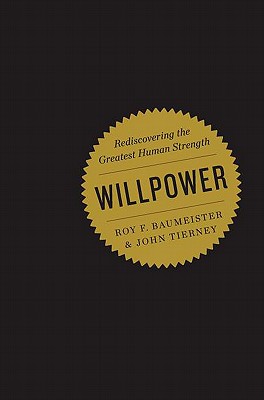
Since I exhibit so little lately, I read Willpower: Rediscovering the Greatest Human Strength by Roy Baumeister  and John Tierney. I learned a few things to help improve my willpower such as:

  • Decision making depletes your willpower. If your work requires you to make hard decisions all day long, you will reach a point where you will be depleted.
  • Willpower is finite.
  • Since stress decreases willpower, focus on one project at a time.
  • To lose weight, set realistic goals, monitor your progress by a log, weigh yourself every day and brush your teeth early in the evening to discourage late night snacking.

This book provides tips to improve your willpower that are backed by science and research. It's not just another self help tome. Easy to read. The authors use some great examples to get their points across.

Monday, August 9, 2010

Best Book I Have Read (in the past month)

I enjoyed and got a lot out of The Shallows: What the Internet is Doing to our Brains by Nicholas Carr. Since I have a hard time with my concentration when I read or write, Carr's explanations on how the Internet affects our mental discipline and focus was interesting. I don't read books or articles as much as I skim and scroll through them. And I have a very hard time remembering what I have read. I blamed much of this on my advancing years but I can see how the Internet has scrambled the way I think.

Very insightful. A very good read (or skim given my lack of concentration).

Monday, May 10, 2010

Tales of Keeping Your Mind and Protecting Your Money

I skimmed through two books. One book was to help me keep my mind sharp, the second was a lesson in keeping my money, away from greedy bankers, financial advisors and brokers.

As an aging baby boomer I was interested in The Secret Life of the Grown Up Brain by Barbara Strauch. My memory is not what it used to be and my attention to detail, particularly at work, has slipped. Strauch offers an optimistic outlook generally for how well our minds will function as we get older. Her contention is that older people tend to be more content and happier. She offers science and personal stories to support her rosy outlook. She also suggests that we may become more distracted and I can attest to that argument. Amazon readers rate this book very highly. It's not exactly a page turner but as I just said, I get easily distracted.

This may be about the tenth book I have read on the collapse of out financial system. I found parts of The Big Short by Michael Lewis a bit hard to read. Even though I am in banking, I got lost in the details and nuances of some of the transactions and products that Lewis was writing about. This is not a book about the major players who were involved in the financial meltdown of our banks and institutions. However the themes are the same: greed, stupidity and the pillaging of investors who were denied the information and candor to avoid huge personal financial losses.

Saturday, August 4, 2007

Why Do Men Prefer Blondes and Other Human Nature Questions

Best article that I have read this week. It comes from Psychology Today. One of the ten politically incorrect truths about human nature suggests that a man's midlife crisis is a result of their wives being middle-aged and at the end of their reproductive cycle. The middle age man then buys a fancy car to attract younger women. Hmm...

I can't say that I necessarily agree with all the ideas presented in the article (e.g. It's natural for male politicians to risk everything for an affair) but it was thought provoking.